Box Truck Dimensions Explained: Comparing 16-, 24- and 26-Foot Bodies
The last delivery barely fits. The driver makes it work, but everyone knows tomorrow’s larger order will mean a second trip. Sound familiar?
Choosing box truck dimensions is about finding space that earns its keep. Too little creates extra runs. Too much can complicate parking, loading and access.
At Way Scarff Isuzu in Auburn, we help local business owners think beyond the length on the listing. Here’s how 16-, 24- and 26-foot bodies compare, and what to measure before choosing your next Isuzu.
What Box Truck Dimensions Actually Tell You
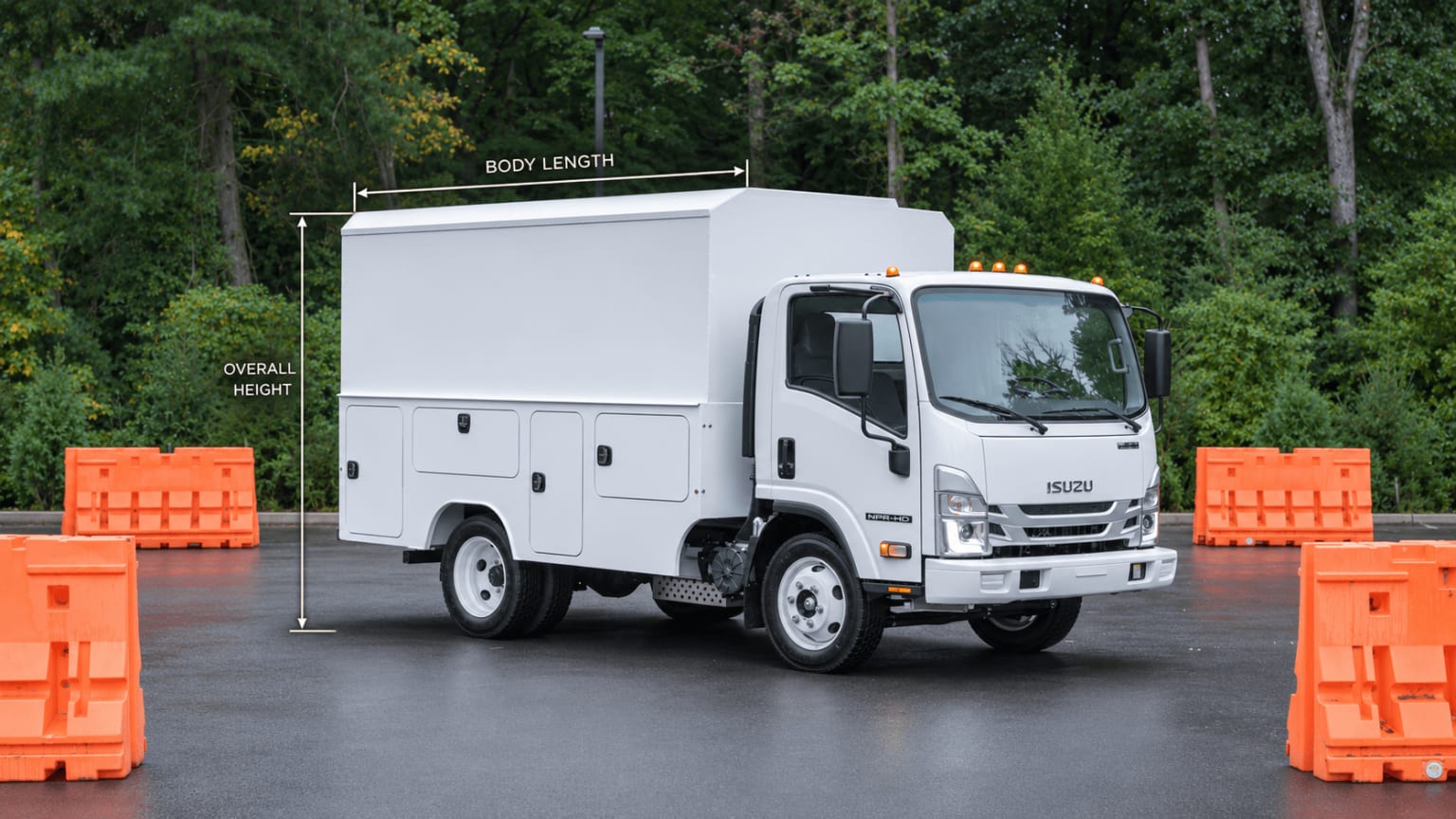
A 16-foot designation describes nominal cargo-body length, not the entire vehicle. The cab, bumpers and installed equipment affect the finished truck’s footprint.
Useful box truck dimensions cover interior length, width and height, rear door openings, and overall exterior measurements. Each answers a different question: Will the freight fit? Can you load it? Can the truck reach the customer?
You’ll see standard box truck dimensions in shopping guides, but Isuzu chassis support different bodies. Construction, insulation, lining and door hardware all affect usable space.
Compare Three Isuzu Body Sizes
For a concrete look at box truck dimensions, consider Advantic bodies engineered for Isuzu trucks. This manufacturer lists these nominal configurations:
Nominal body length | Isuzu application | Listed body width × height |
16 feet | N-Series | 96 × 90 inches |
24 feet | F-Series | 96 × 96 or 102 × 102 inches |
26 feet | F-Series | 96 × 96 or 102 × 102 inches |
These are body-size designations, not guaranteed clear interior measurements or completed truck heights. Always confirm the exact build and availability with our team.
Even standard box truck dimensions need context: two bodies with the same length may differ in width, height and loading access.
16 ft Box Truck Dimensions: Space for the Daily Route
A shorter body deserves consideration when stops are frequent and space is tight. Think appliance deliveries, equipment runs or local service routes where every driveway adds another turn.
Reviewing 16 ft box truck dimensions? Start with your largest packaged item. Then leave room for tie-downs, protective materials and safe access to deliveries farther inside.
Isuzu’s N-Series diesel specifications list a 150-inch standard-cab wheelbase for 16–18-foot bodies. That’s one chassis reference, not a promise that every N-Series model accepts the same upfit.
Compare 16 ft box truck dimensions against your busiest normal day. If the body handles that load without awkward stacking or blocked access, the shorter configuration may be enough.
The right box truck dimensions can make loading more orderly. A truck that’s easier to place at the destination can also save time that never appears on a cargo-volume chart.
24-Foot Bodies: More Room Without the Final Two Feet
A 24-foot body gives you eight additional nominal feet compared with a 16-footer. At equal usable width and height, that means roughly 50% more cargo volume before accounting for layout and equipment.
This size is worth exploring for furniture, retail replenishment and distribution work that regularly outgrows a shorter body.
Treat standard box truck dimensions as the opening conversation. Ask whether the wider version helps your loading pattern, whether your dock can accommodate it, and whether the chassis supports the completed build.
Isuzu’s F-Series specifications pair a 212-inch wheelbase with 22–24-foot bodies, while a 224-inch wheelbase supports 22–26-foot bodies. Selecting box truck dimensions therefore includes selecting a compatible chassis, not simply ordering a longer box.
Before stepping up from a shorter body, revisit your 16 ft box truck dimensions and identify the actual bottleneck. You might need more floor length, more width or a different loading arrangement.
26 Foot Box Truck Dimensions: Make the Extra Length Count
For larger delivery runs, 26 foot box truck dimensions deserve a closer look. Those extra two nominal feet over a 24-footer can provide welcome flexibility for bulky orders.
At matching usable width and height, the length difference represents about 8.3% more volume. A wider or taller body changes that calculation, so compare complete box truck dimensions rather than length alone.
Measure the destinations, too. A larger body needs room to turn, back and unload. Check tail swing, liftgate operating space and the path from the street to the receiving area.
There’s no single set of standard box truck dimensions that guarantees access. A truck that suits a warehouse route may be awkward at a restaurant’s rear entrance.
Plan the Floor Before You Buy
Sketch your usual load from above. Mark each pallet or bulky item, then add the space needed to secure it and reach the next delivery. This turns box truck dimensions into a loading plan.
Two extra feet won’t always create another complete row of freight. They may instead provide space for a pallet jack, protective blankets or the odd-shaped item that never stacks neatly. Load order matters, too: if the first customer’s shipment is behind everything else, extra volume alone won’t fix the unloading problem. Plan around the way your crew actually works.
Room for More Cargo Does Not Mean More Payload
Box truck dimensions describe space. Payload describes weight. You need both to work.
A larger body, liftgate, shelving and other equipment use part of the vehicle’s weight allowance. Passengers, tools and freight add more. Confirm the completed truck’s available capacity and axle limits instead of treating a chassis brochure’s body-payload figure as cargo capacity.
Isuzu lists its FTR at a 25,950-pound gross vehicle weight rating. That’s the maximum rated loaded vehicle weight, not the amount of freight it can carry.
Measure the Load, the Door and the Destination
Bring these measurements when we discuss box truck dimensions:
Freight: largest packaged item, total load weight and loaded pallet height.
Loading: rear opening width and height, dock height, and ramp or liftgate requirements.
Access: lowest overhead clearance, entrance width and available turning space.
Layout: shelving, cargo restraints, handling equipment and room to reach each delivery.
If you’re checking 16 ft box truck dimensions, measure with the actual packaging and equipment included. An appliance on a dolly needs more room than the appliance alone.
Use standard box truck dimensions to narrow the search, then verify each measurement on the specific completed Isuzu truck.
Find the Fit for Your Business at Way Scarff Isuzu
Bring us your route, your load and the measurements that keep you guessing. We’ll help you compare box truck dimensions and explore Isuzu chassis and body options suited to the work.
Contact Way Scarff Isuzu in Auburn today to discuss your next commercial truck. The goal is straightforward: enough room for the job, with a truck that fits the places you need to go.
Quick Answers Before You Choose
Are all 16-foot Isuzu bodies the same size?
No. The 16 ft box truck dimensions on one build may differ from another in usable width, interior height and door clearance. Read the selected body’s specification sheet.
Does a 26-foot body mean a 26-foot-long truck?
No. The 26 foot box truck dimensions usually describe the cargo body. The complete vehicle extends beyond it, so confirm overall length before planning parking or access.
Can I use one size chart for every Isuzu truck?
No. Standard box truck dimensions cannot replace the measurements for a particular chassis, body and equipment combination.