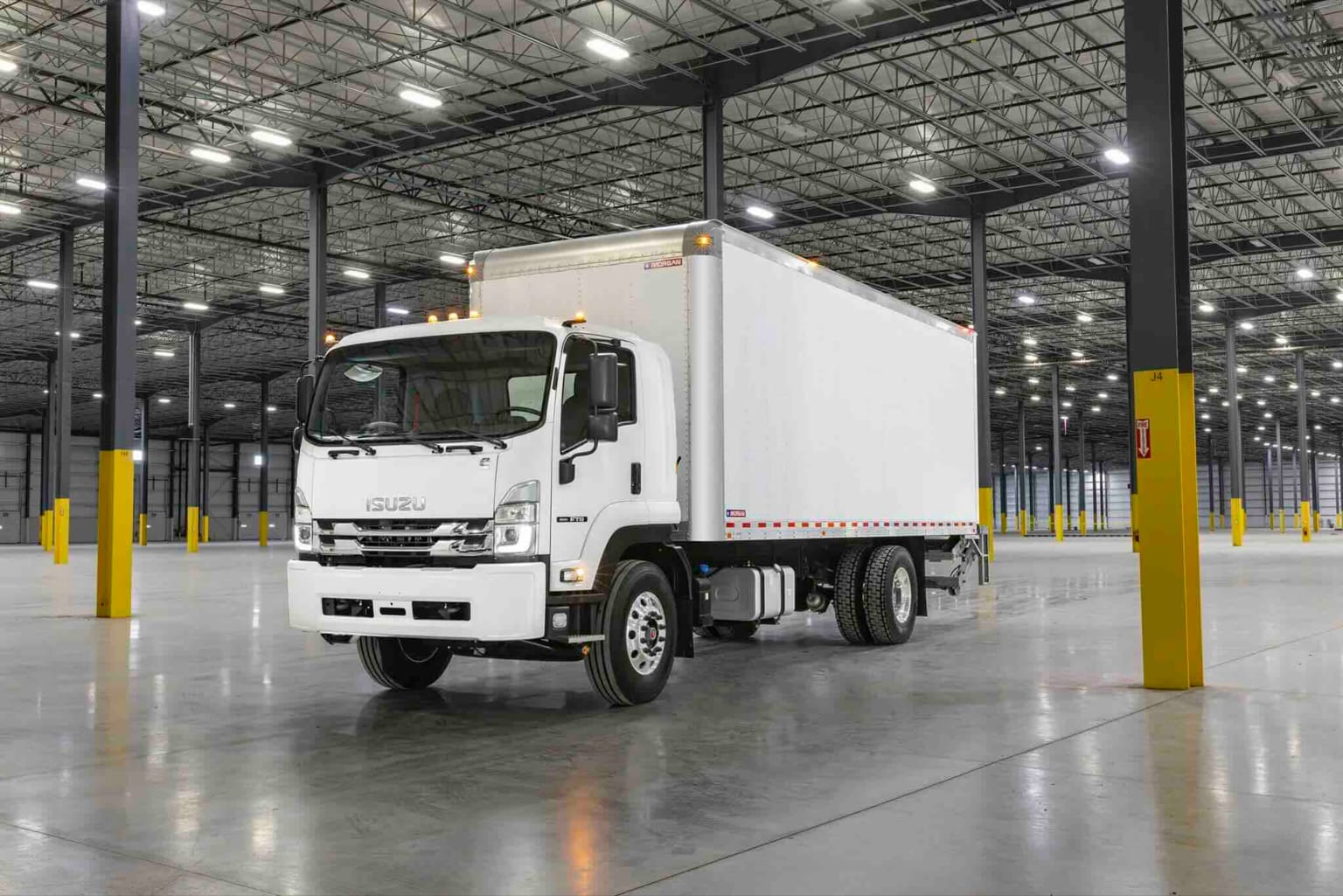
Isuzu F-Series Trucks Explained: Built for Bigger Jobs
Some businesses reach a point where a lighter-duty truck just isn’t enough. The route gets heavier. The body needs to get longer. Payload disappears faster. Suddenly, “good enough” is costing time.
That’s where the Isuzu F-Series steps in. Built for Class 6 and Class 7 work, these low-cab-forward trucks give delivery companies, contractors, distributors, moving crews, and other commercial operations more chassis underneath the job. Current models combine a Cummins diesel engine with multiple wheelbases and body lengths reaching up to 30 feet.
At Way Scarff Isuzu in Auburn, we help businesses shopping Isuzu F-Series trucks for sale match that extra capability to the work they actually do.
FTR or FVR? Start With How Heavy the Day Gets
The Isuzu F-Series lineup isn’t organized like a passenger vehicle with basic, luxury, and premium trims. FTR and FVR are different working platforms built around different weight requirements.
The FTR is a Class 6 truck with a 25,950-pound GVWR. The FVR Derate also carries a 25,950-pound GVWR, while the full Class 7 FVR steps up to 33,000 pounds. GCWR ranges from 30,000 pounds on FTR to 33,000 pounds on both FVR versions.
That makes FTR a logical step for businesses that have outgrown smaller commercial trucks, while FVR gives heavier operations more room to plan around larger loads and body requirements.
When looking at Isuzu F-Series trucks for sale, don’t start with the biggest badge. Start with the heaviest day your business expects the truck to handle.
One Diesel Engine, Plenty of Work to Do
Across the lineup, the Isuzu F-Series uses a Cummins B6.7L turbocharged diesel engine rated at 260 horsepower and 660 lb-ft of torque. FTR pairs it with an Allison 2550 RDS six-speed automatic, while the FVR configurations use an Allison 2500 RDS six-speed automatic.
For an Isuzu F-Series commercial truck, horsepower is only part of the conversation. Torque, vehicle weight, body equipment, cargo, route conditions, and daily stop count all play into how the truck will work.
A beverage distributor climbing hills with a loaded body has different needs than a moving company carrying bulky furniture. The engine may be the same, but the finished truck and workload can be completely different.
Up to 30 Feet Changes What You Can Build
One of the biggest advantages of the Isuzu F-Series is the room it gives businesses to build around the job.
Isuzu offers eight wheelbases from 152 to 248 inches, supporting body lengths from 14 to 30 feet depending on configuration. That range gives businesses shopping Isuzu F-Series trucks for sale more flexibility to choose dry freight, refrigerated, beverage, moving, flatbed, stake, and other vocational bodies. Way Scarff Isuzu also works with commercial customers to match chassis and body requirements to real-world applications.
A longer body can mean more delivery volume or fewer compromises on equipment. But bigger isn’t automatically better. Longer trucks need more maneuvering room, and every body, liftgate, refrigeration unit, shelf, and tool adds weight.
Dimensions That Shape the Whole Build
The Isuzu F-Series dimensions change substantially with wheelbase.
A 152-inch wheelbase configuration shows how the Isuzu F-Series can be tailored to the job, with an overall chassis length of 274.4 inches and support for a 14- to 16-foot body. At the other end, the 248-inch wheelbase stretches to 418.5 inches overall and can support a 26- to 30-foot body. Isuzu lists an overall cab width of 93.5 inches across these configurations.
Those Isuzu F-Series dimensions matter before the body ever goes on. Think about loading docks, customer parking lots, warehouse entrances, turning space, route density, and where the truck spends the night.
A truck running deliveries around Auburn and Kent may need a different wheelbase than one moving freight between larger distribution points around Tacoma or Seattle.
Cab-Over Design Keeps a Big Truck Manageable
A larger truck doesn’t have to come with a long hood stretching out in front of the driver.
The Isuzu F-Series keeps Isuzu’s low-cab-forward design, placing the cab over the engine and giving drivers a more direct view of the space ahead. Way Scarff’s FTR research page highlights that layout as especially useful around docks, alleys, tight delivery areas, and crowded commercial sites.
That can be valuable for an Isuzu F-Series commercial truck spending its day making repeated stops. Bigger capability still needs to work in the real places your drivers visit.
Match the Chassis to the Money-Making Part
FTR may be the better fit when your business needs Class 6 capacity, a longer body, or a step up from an N-Series truck without moving into Class 7.
FVR becomes more relevant when heavier working weights push beyond what FTR can support. The FVR Derate gives businesses another Class 6 configuration while retaining much of the heavier FVR hardware.
Before choosing among Isuzu F-Series trucks for sale, bring your actual numbers: loaded cargo weight, required body length, liftgate needs, route type, loading method, and any towing plans. Those details tell you much more than simply saying, “We need a bigger truck.”
Build Your Next Work Truck in Auburn
At Way Scarff Isuzu, our commercial team can help you review the Isuzu F-Series by GVWR, wheelbase, body length, payload needs, and upfit plans. We work with businesses throughout Auburn and the greater Seattle area on commercial truck sales, financing, parts, service, and body configurations.
Bring us the job you need the truck to do. We’ll help you explore Isuzu F-Series trucks for sale and narrow the chassis before you commit to the finished build.
Bigger Jobs Need the Right Foundation
FTR and FVR aren’t simply bigger versions of the same truck. They give businesses different ways to put Class 6 or Class 7 capability underneath the work.
That’s what makes the Isuzu F-Series useful. Choose the right weight class, wheelbase, body, and equipment, and you’re not just buying more truck. You’re building a better tool for the job.