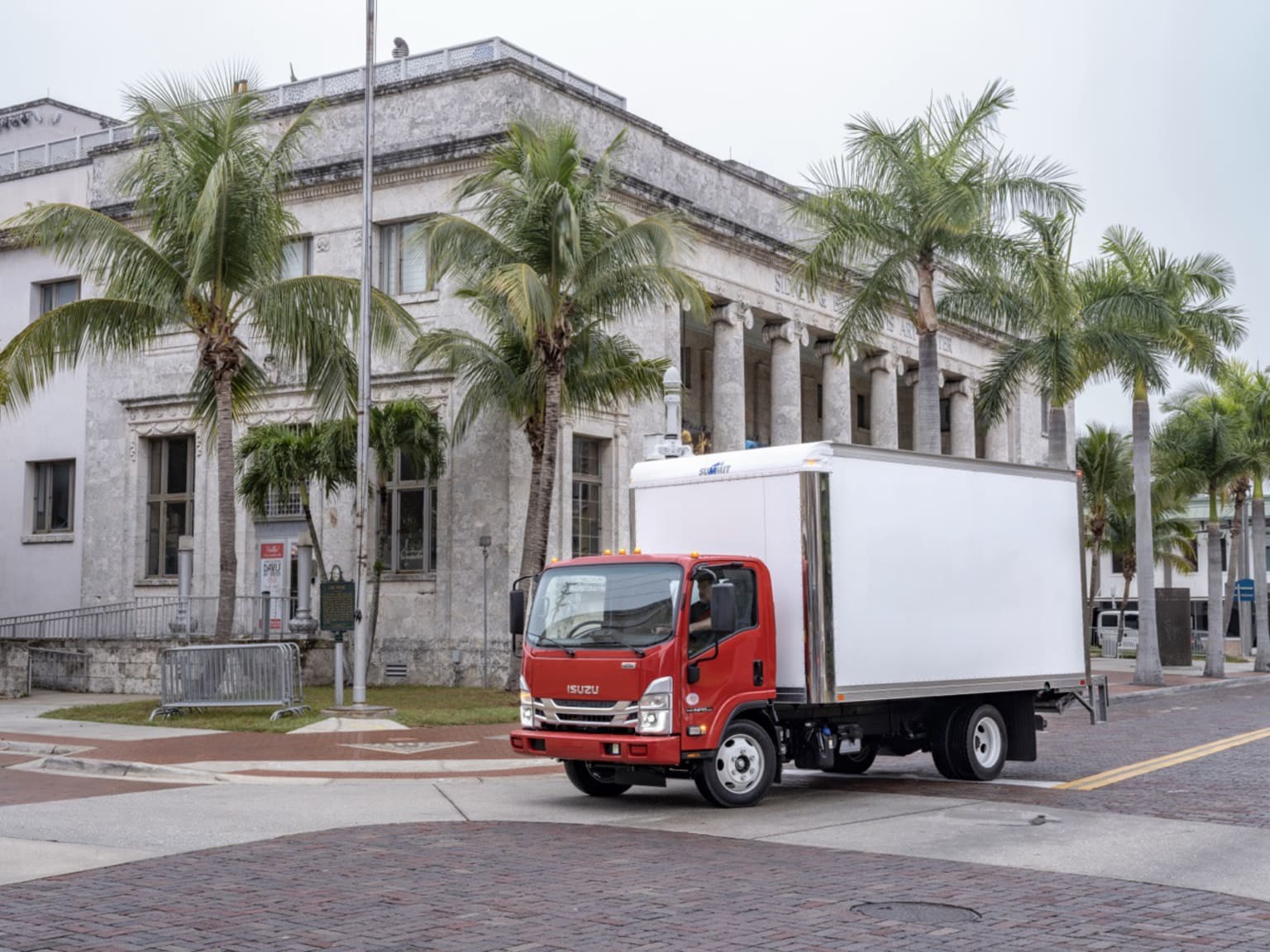
Why the Isuzu NPR-XD’s 16,000-Lb GVWR Works So Well for Small Businesses
There’s a point where a lighter commercial truck starts feeling a little too light, but jumping straight into a much heavier chassis still feels like overkill.
That’s where the Isuzu NPR-XD earns its place.
With a 16,000-lb. GVWR, diesel power, and several wheelbase and body-length possibilities, the NPR-XD gives growing businesses more breathing room without forcing them into the heaviest truck in the N-Series lineup. For delivery companies, contractors, landscapers, service businesses, and other operators around Auburn and the greater Puget Sound area, that middle ground can be exactly what the workday calls for.
Why 16,000 Pounds Hits a Useful Sweet Spot
GVWR, or Gross Vehicle Weight Rating, is the maximum allowable weight of the completed truck, including the chassis, body, passengers, equipment, and cargo.
The Isuzu NPR-XD carries a 16,000-lb. GVWR, putting it at the top of Class 4. That gives it more capacity than the 14,500-lb. NPR-HD without jumping to the 17,950-lb. NQR or 19,500-lb. NRR.
That extra room can matter when a business adds shelving, a liftgate, refrigeration equipment, tanks, tools, or simply heavier daily cargo.
In other words, the Isuzu NPR GVWR ladder lets businesses move up in sensible steps instead of buying far more truck than the job requires.
More Room for the Body and the Load
A 16,000-lb. rating doesn’t mean you can put 16,000 pounds of cargo in the back. The truck itself, body, equipment, passengers, and cargo all count toward GVWR.
For 2026 NPR-XD standard-cab chassis, Isuzu lists body-and-payload allowance ranging from about 9,430 to 9,576 pounds depending on wheelbase. Crew-cab versions list approximately 8,831 to 8,879 pounds. The actual payload left after upfitting depends on the weight of the body and installed equipment.
That’s why the Isuzu NPR-XD can work so well for small businesses. It gives an upfitter and business owner meaningful capacity to work with before the final body, equipment, and cargo are factored in.
The goal isn’t just more weight capacity. It’s enough margin to build the truck around the job.
One Chassis Can Wear a Lot of Uniforms
The NPR-XD’s low-cab-forward chassis can support several types of commercial bodies.
Current 2026 dimensional information shows the Isuzu NPR-XD with standard-cab wheelbases of 109, 132.5, 150, and 176 inches, supporting suggested body lengths from roughly 10 to 20 feet depending on wheelbase. Crew-cab configurations are offered with 150- and 176-inch wheelbases and suggested 12- or 16-foot bodies.
That flexibility matters when your version of “work truck” could mean a box van, landscape body, service setup, refrigerated body, or another vocational upfit.
When you’re weighing Isuzu NPR GVWR options, that kind of chassis flexibility can make it easier to build the best truck lineup for small businesses without simply choosing the model with the highest number on the door.
Diesel Torque Fits the Job-First Personality
The current diesel Isuzu NPR-XD uses Isuzu’s 5.2L 4HK1-TC turbocharged and intercooled four-cylinder engine.
It produces 215 horsepower and 452 lb-ft of torque, with peak torque arriving at 1,850 rpm. The engine pairs with an Aisin six-speed automatic transmission.
Those numbers suit the NPR-XD’s purpose. Commercial trucks spend their lives starting with weight on board, moving through traffic, making stops, and getting back up to speed.
For an owner choosing between different Isuzu NPR GVWR levels, powertrain and workload should be considered together rather than treating GVWR as the only deciding factor.
Bigger Isn’t Better if the Route Doesn’t Need It
A 19,500-lb. truck may offer more capacity, but that doesn’t automatically make it the smarter purchase.
A local delivery business running moderate loads through Auburn, Kent, Renton, Tacoma, or Seattle may value a truck that provides additional capacity while remaining manageable on tighter streets, loading areas, and customer sites.
That’s the appeal of the Isuzu NPR-XD. It occupies a useful space between lighter NPR configurations and the heavier end of the N-Series family.
Right-sizing also leaves room to think about the details that really affect the workday: body length, crew needs, liftgates, shelving, cargo density, route conditions, and the weight of the completed upfit.
Spec Your NPR-XD Around the Work at Way Scarff Isuzu
The smartest commercial-truck decision usually starts with what you carry, not which badge you want.
At Way Scarff Isuzu in Auburn, our commercial truck team can help you work through the Isuzu NPR GVWR range, wheelbases, cab choices, body requirements, and upfit needs before you commit to a configuration. We’re located at 501 Auburn Way North and support commercial operators throughout the Puget Sound region.
Explore our Isuzu NPR-XD inventory or tell our team what your business moves every day. We’ll help you determine whether 16,000 pounds is the sweet spot for the job.
Enough Truck Without Too Much Truck
For a growing small business, capability is useful. Excess capacity isn’t automatically better.
The Isuzu NPR-XD stands out because its 16,000-lb. GVWR gives businesses room for meaningful upfits and payload without immediately stepping into a heavier Class 5 chassis.
Sometimes the best truck lineup for small businesses isn’t built around the biggest truck available. It’s built around the one that leaves exactly enough room for the business to grow.