
A Landscaping Truck Has to Carry More Than Grass Clippings 🌱
A good landscaping truck may haul mowers in the morning, mulch or debris later, and still need room for tools, materials, and crew gear.
That’s where the Isuzu N-Series fits well. Its low-cab-forward design improves forward visibility, tightens the turning circle, and leaves more chassis space available for the body.
With multiple wheelbases, standard and crew cabs, gas and diesel powertrains, and body lengths up to 24 feet on certain configurations, an Isuzu landscape truck can be built around the job.
Around Auburn, Kent, Federal Way, Tacoma, and the Puget Sound, that flexibility works well for everything from tight residential routes to larger commercial properties.
Why Isuzu Works So Well for Landscaping Crews
A landscaping truck needs to handle tight driveways, frequent stops, changing loads, and crowded jobsites. Isuzu’s low-cab-forward design helps by improving visibility and maneuverability where crews actually work.
Better Visibility in Tight Spaces
With the cab positioned over the engine, drivers sit farther forward than in a conventional truck. That can make it easier to see around parked vehicles, curbs, equipment, and narrow jobsite entrances.
More Chassis Space for the Body
The cab-over layout also uses less space in front of the driver, leaving more chassis length available for the working body.
Depending on configuration, N-Series chassis can accommodate body lengths from roughly 10 to 24 feet, giving an Isuzu landscape truck flexibility for dump bodies, stake bodies, equipment setups, or crew-cab configurations.
Which Isuzu N-Series Fits Landscaping Work?
The right Isuzu landscape truck depends on the finished body, crew size, material weight, equipment, and route. Instead of starting with the biggest GVWR, start with the job the truck needs to handle every day.
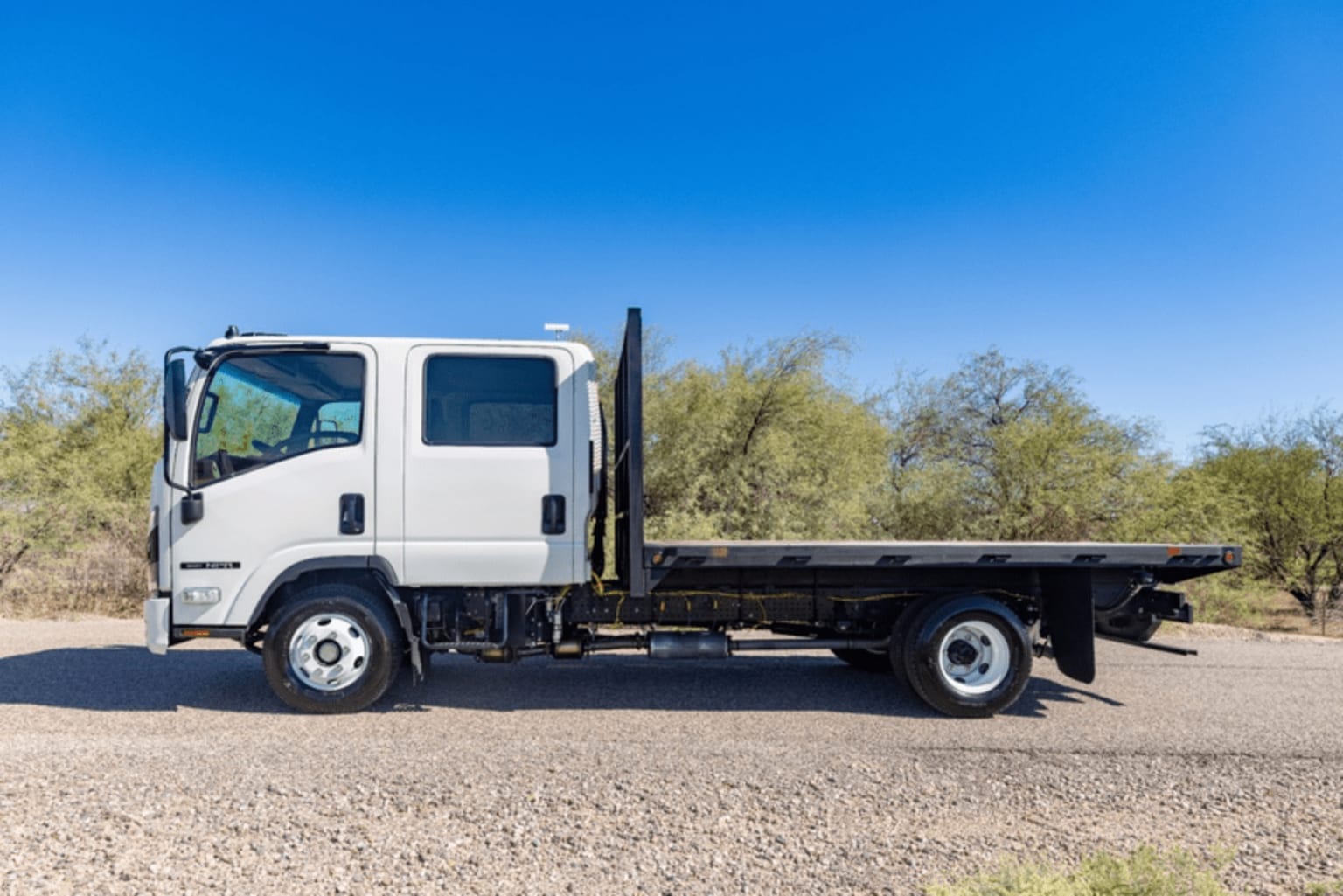
Lighter-Duty Routes and Residential Crews
NPR Gas: 12,000-lb. GVWR
A strong starting point for compact landscape bodies, residential maintenance routes, and crews that value maneuverability over maximum capacity.
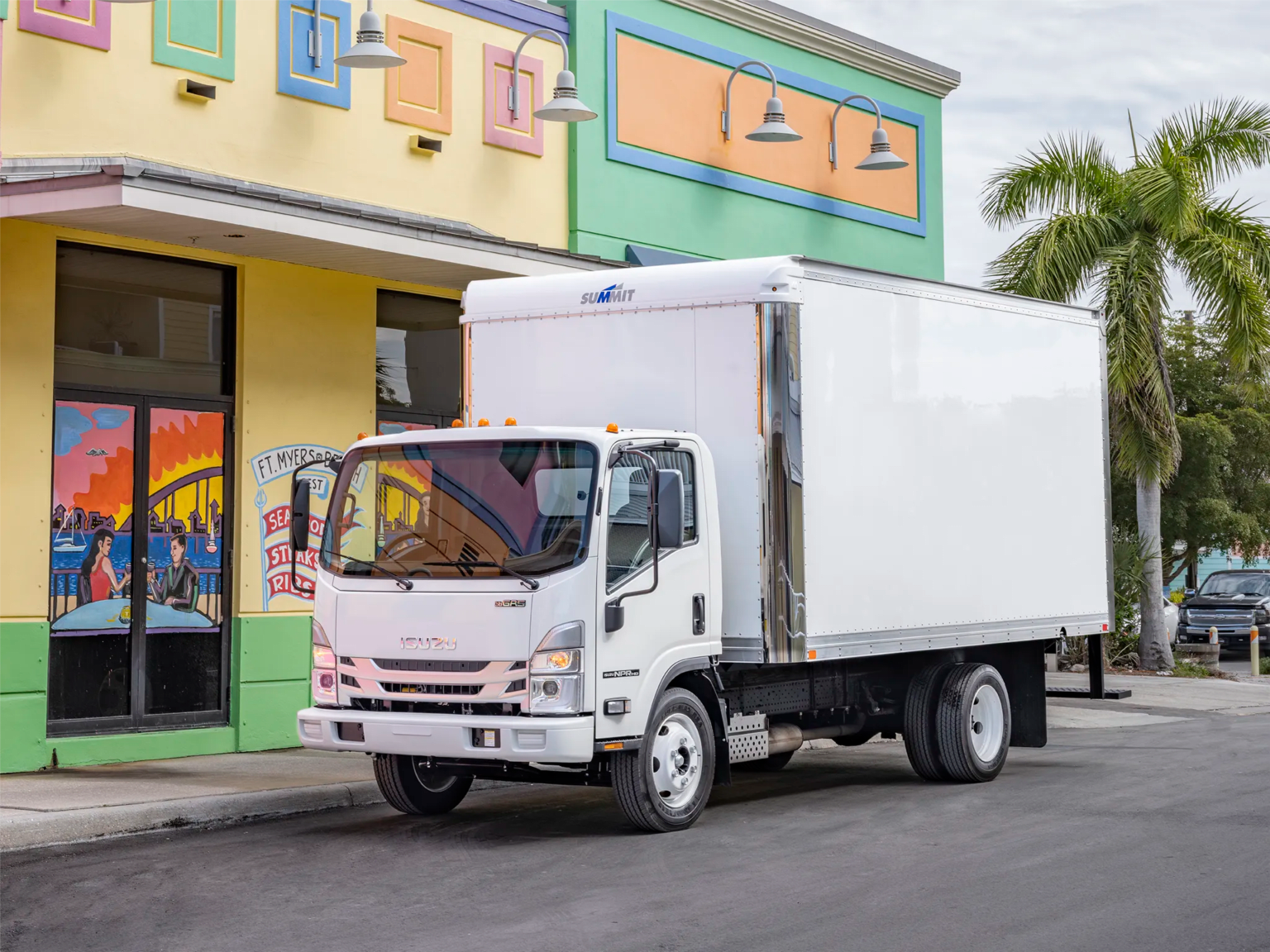
More Equipment and Material to Carry
NPR-HD and NPR-XD: 14,500 to 16,000-lb. GVWR
These models give an Isuzu landscape truck more room for heavier bodies, equipment, tools, and material without immediately moving to the largest N-Series chassis.
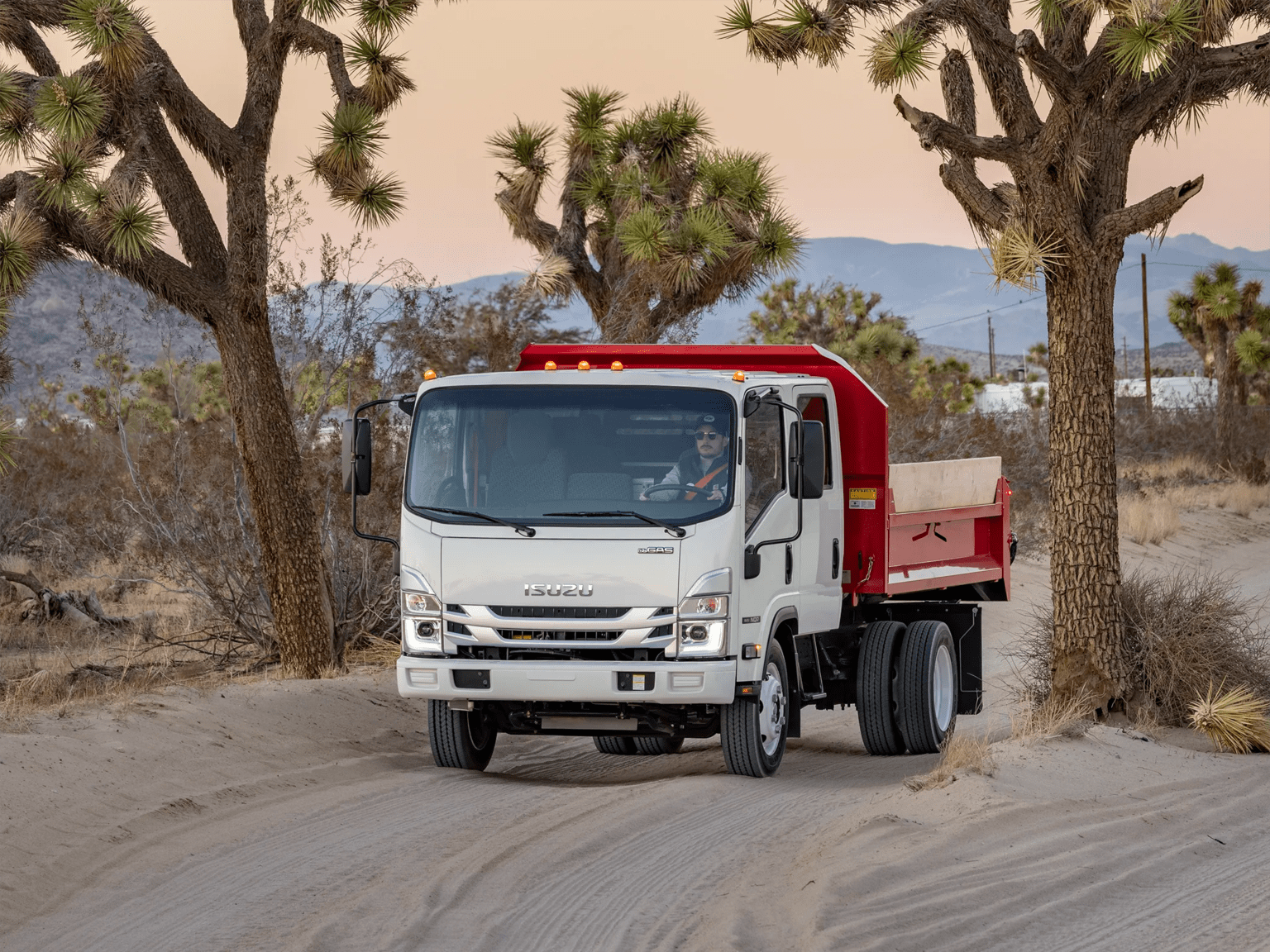
Bigger Bodies and Heavier Work
NQR and NRR: Up to 19,500-lb. GVWR
These heavier-duty Isuzu landscape trucks make more sense when larger bodies, substantial material loads, or demanding commercial work push beyond lighter chassis requirements.

Gas or Diesel? Start With How the Truck Will Work
Current Isuzu N-Series models give landscaping truck operators both gas and diesel options.
Gas models use a 6.6L V8 producing 350 horsepower and 425 lb-ft of torque, paired with an eight-speed or Allison six-speed automatic depending on model.
Diesel models use Isuzu’s 5.2L turbocharged four-cylinder, producing 215 horsepower and 452 lb-ft of torque with an Aisin six-speed automatic.
Gas may suit crews prioritizing familiar fueling, strong horsepower, and frequent stop-and-go routes. Diesel may appeal more to businesses that value low-rpm torque and regularly operate under heavier loads.
The better fit depends on mileage, duty cycle, payload, upfit, maintenance planning, and how the truck will be used.
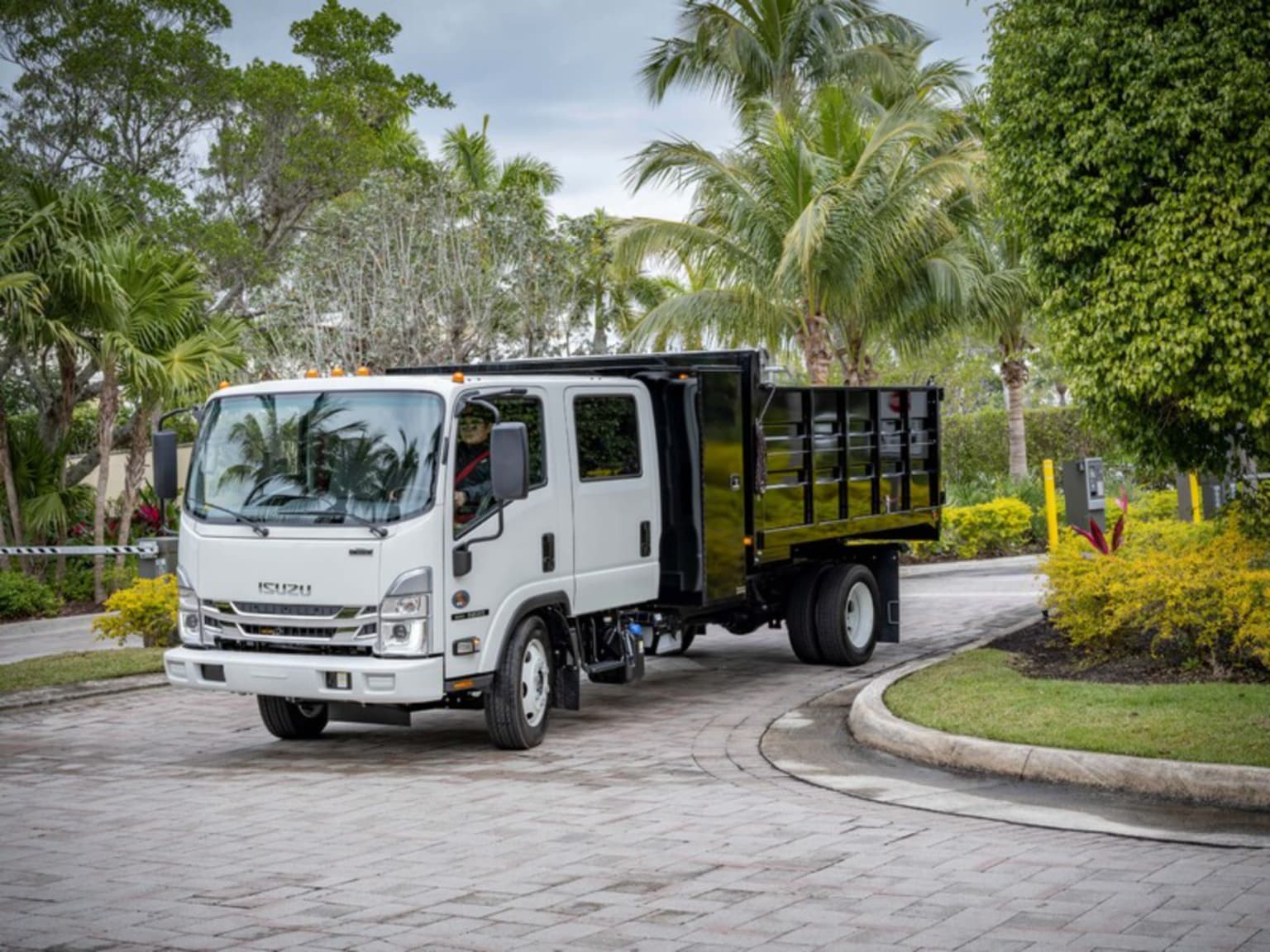
The Body Is What Turns an N-Series Into a Landscaping Truck
The chassis is the foundation. The body determines how useful the truck is on the job.
Common landscaping upfits include:
Dump bodies for mulch, soil, and debris
Stake or platform bodies for plants and equipment
Side-access storage for tools
Rear gates or ramps for mowers
Toolboxes, racks, tarps, and hitch equipment
An Isuzu NPR landscape truck can pair a compact low-cab-forward chassis with a purpose-built body for material, tools, and equipment.
At Way Scarff Isuzu, our commercial team can help match the wheelbase and chassis to the upfit, making it easier to configure Isuzu landscape trucks around the way your crew actually works.
Standard Cab or Crew Cab Can Change the Whole Setup
How many people need to reach the jobsite in one vehicle? That question should come up early when choosing a landscaping truck.
Standard Cab
A standard cab leaves more chassis length available for the body at a given overall truck length.
It’s a strong fit when one or two employees usually ride in the truck and maximizing body space is the priority.
Crew Cab
A crew cab gives an Isuzu landscape truck room for a larger crew, which can reduce the need to send a second vehicle just to move employees.
The tradeoff is less available chassis length for the body, so crew size, wheelbase, and upfit need to be planned together.
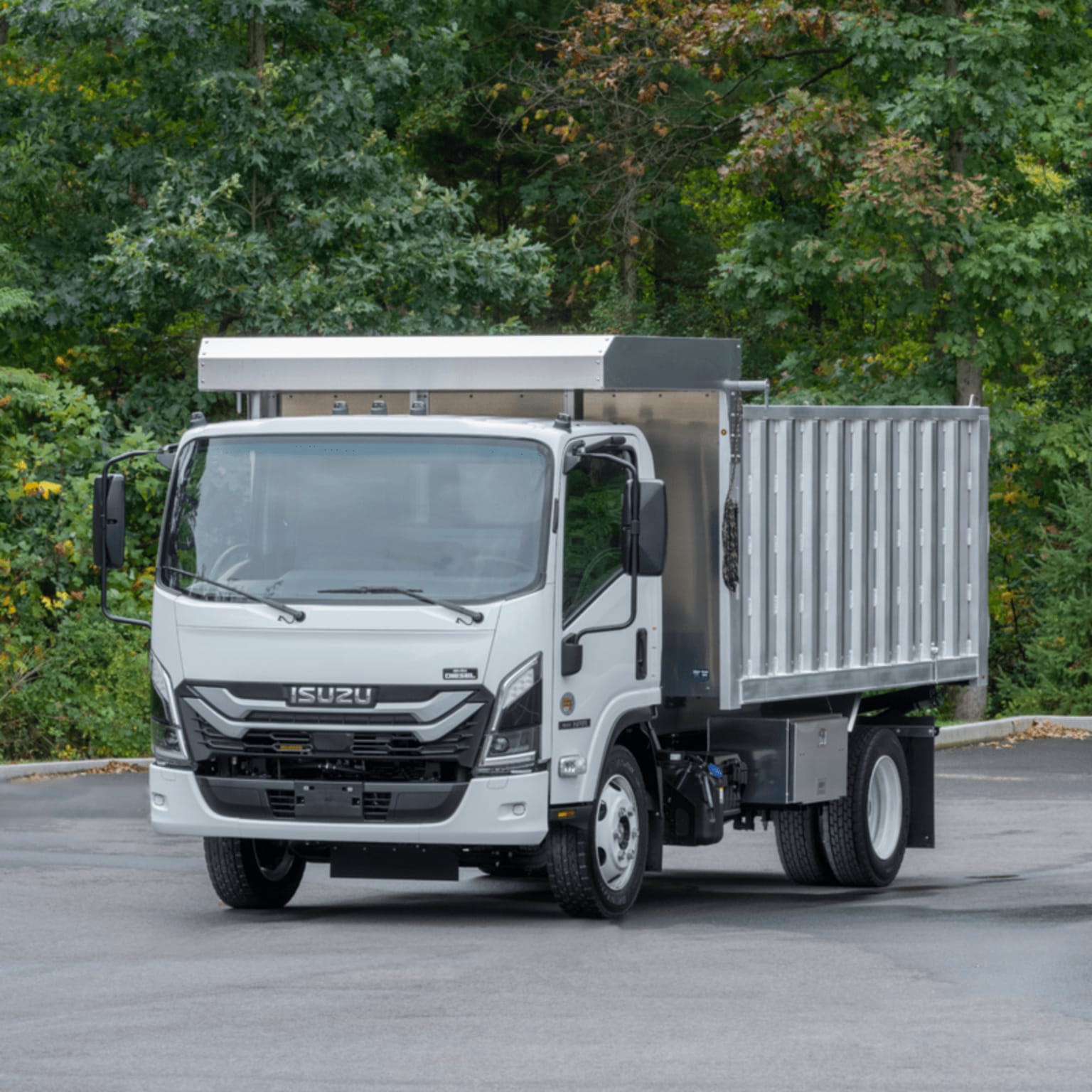
Move Material Faster With a Landscape Dump Body
A landscape dump body can make loading, hauling, and cleanup more efficient throughout the workday.
Crews can carry mulch, soil, branches, clippings, and other material without relying on as much manual unloading. For businesses making multiple stops, a dump-equipped landscaping truck can help reduce handling and keep jobs moving.
That’s one reason Isuzu landscape trucks work well with dump-body upfits built around landscaping routes and material handling.
The key is choosing the right completed setup. Body weight, hydraulic equipment, toolboxes, hitch hardware, passengers, and cargo all affect available payload, so capacity should be based on the finished truck rather than chassis GVWR alone.
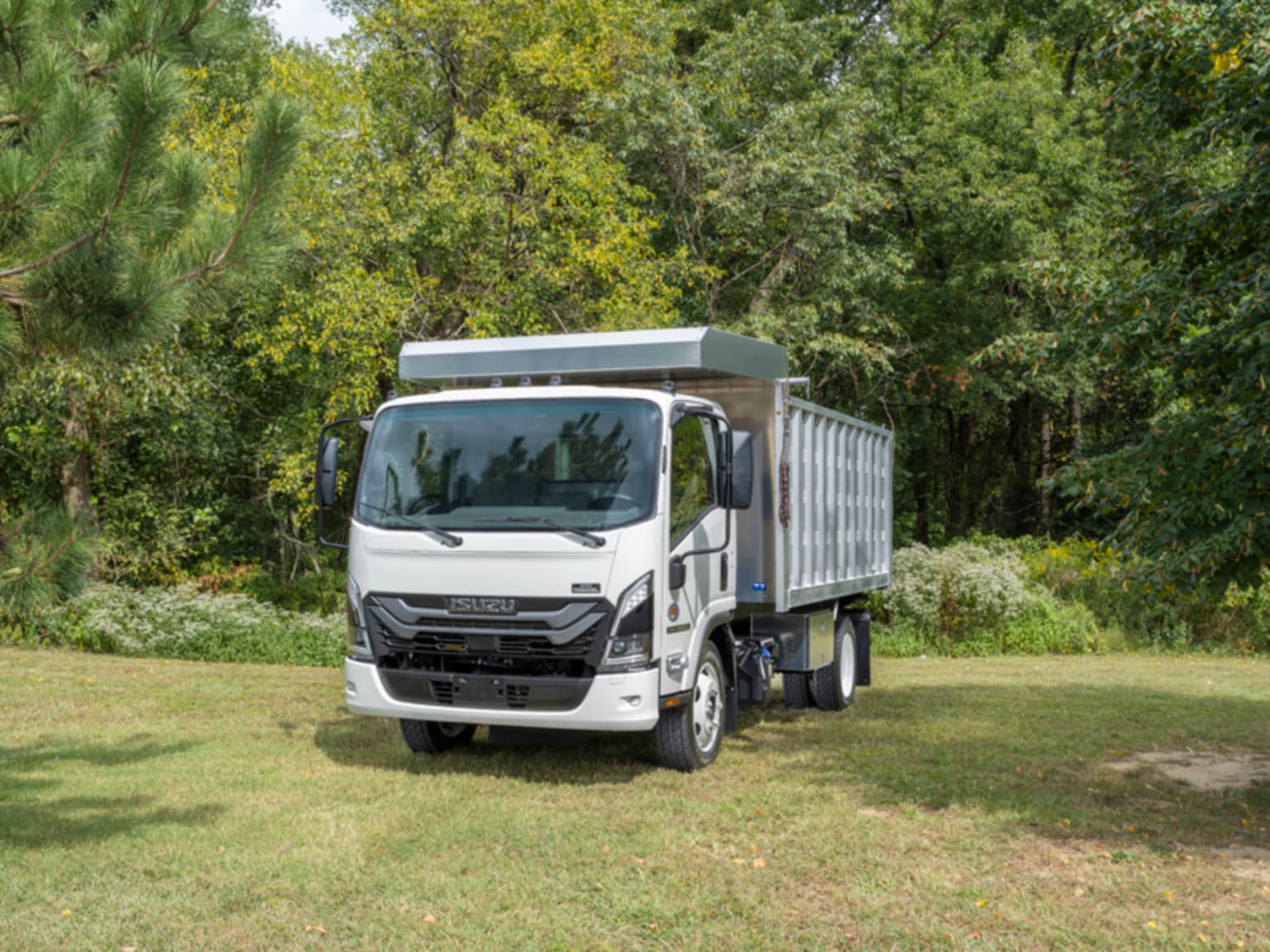
Maneuverability Matters When Every Stop Is Different
A landscaping truck may move from a wide commercial property to a tight residential driveway on the same route.
The Isuzu N-Series uses a low-cab-forward design and tight turning radius to help drivers work around parked vehicles, narrow entrances, and crowded jobsites. On an Isuzu NPR landscape truck, that can make backing toward a debris pile, turning into a property, and repositioning between stops easier.
Those small time savings can add up over a full day of service calls.
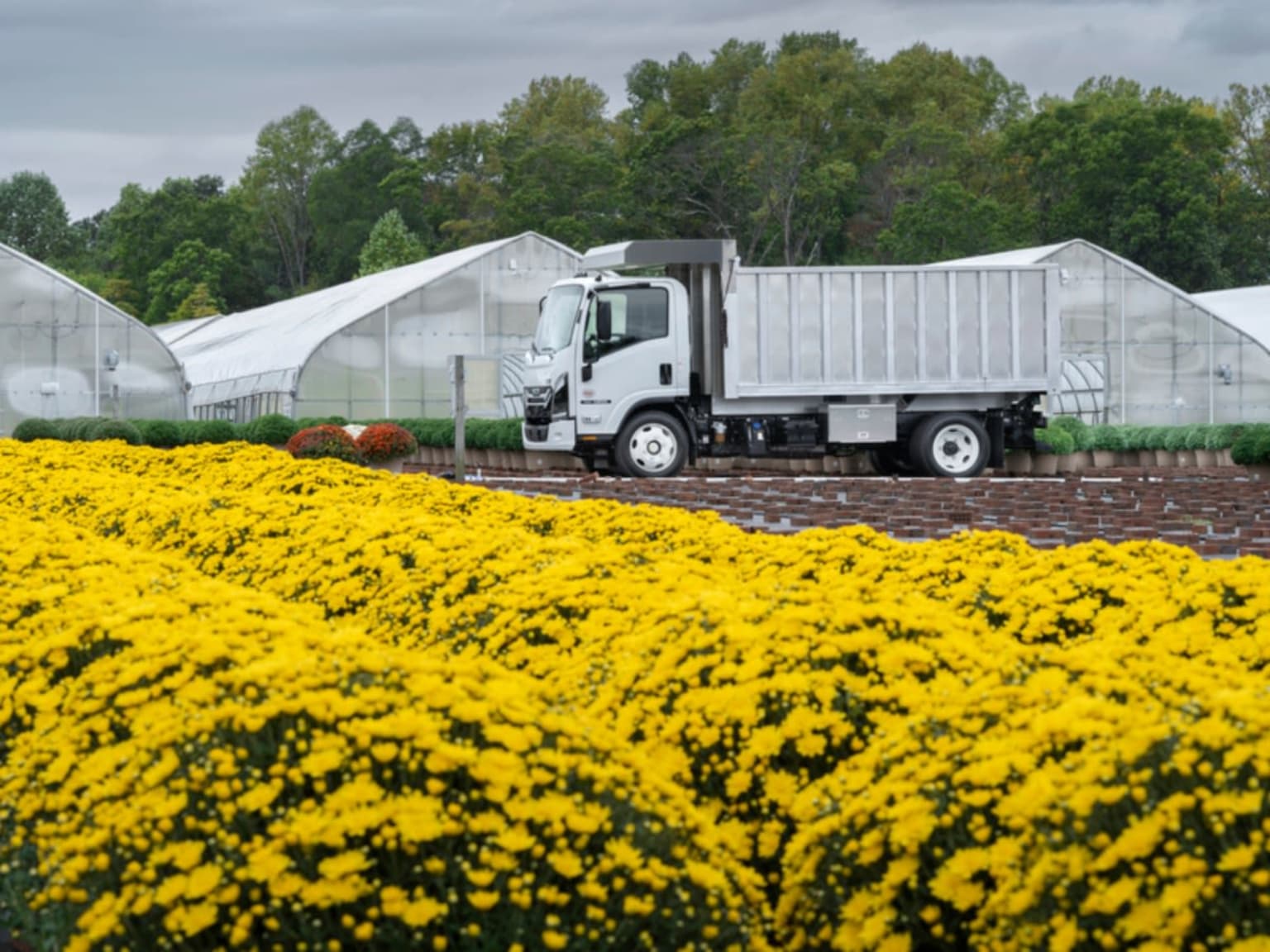
Don’t Forget What You’ll Tow
Many landscaping businesses pull trailers loaded with zero-turn mowers, compact equipment, extra materials, or specialized tools.
If your landscaping truck will tow, plan the truck and trailer together. GVWR, GCWR, hitch equipment, body configuration, payload, passengers, and cargo all affect the finished setup and available towing capacity.
When comparing Isuzu landscape trucks, bring your expected loaded trailer weight into the conversation early instead of choosing the chassis first and figuring out the trailer later.
At Way Scarff Isuzu, our commercial team can help you compare N-Series configurations around the body, equipment, and trailer your crew actually uses.
Build Around the Route, Not Just the Biggest Number
The best landscaping truck is the one matched to the work, not simply the chassis with the highest rating.
Residential Maintenance Crews
Prioritize maneuverability, easy cab access, equipment storage, and a compact body that works well in neighborhoods and tighter driveways.
Material-Heavy Crews
Mulch, soil, rock, debris, and dump-body equipment can add weight quickly. Higher GVWR and careful payload planning become much more important.
Larger Crews
A crew cab can keep more employees in one truck, but it also changes available body length and chassis requirements. Crew size and upfit need to be planned together.
Trailer-Based Operations
If mowers or equipment travel on a trailer, GCWR, hitch equipment, trailer brakes, body weight, and payload all need to be considered before choosing the chassis.
Spec Your Next Landscape Truck at Way Scarff Isuzu
The most useful landscaping truck is the one built around your actual crew, route, equipment, payload, and body requirements.
At Way Scarff Isuzu in Auburn, our knowledgable team can help you compare NPR, NPR-HD, NPR-XD, NQR, and NRR configurations, review available landscape bodies, and determine which cab, wheelbase, powertrain, and GVWR make sense for your operation. Our team can also help you compare Isuzu landscape trucks based on the way your crew actually works.
Landscaping Truck FAQs
Choosing a landscaping truck involves more than picking a body style. These answers cover some of the most common questions about Isuzu chassis, landscape bodies, capacity, and crew needs.